
At A Glance
- Challenges of Large Grids: Understand why bigger boards are harder.
- Effective Strategies: Prioritize long flows, work in sections, and plan ahead.
- Common Mistakes: Avoid dead ends, overlaps, and rushed decisions.
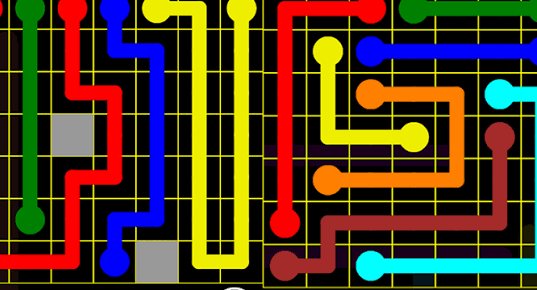
As Flow Free levels increase in size, the complexity grows exponentially. Large grids—typically 12×12 and above—require advanced strategies and careful planning. Completing these puzzles can be intimidating, but with the right techniques, players can achieve perfect completions and master even the most challenging levels.
Challenges of Large Grids
Large grids introduce several challenges:
- Multiple Long Flows: Longer connections increase the chance of blocking other paths.
- Increased Intersections: More flows crossing paths creates higher risk of overlaps.
- Time and Patience: Larger puzzles require more moves, increasing opportunities for errors.
Understanding these challenges helps in developing effective strategies.
Strategies for Large Grids
1. Prioritize Long Flows First
Identify colors with the longest paths and connect them first. These flows create a framework that guides the placement of smaller flows.
2. Divide the Grid Into Sections
Mentally segment the grid into smaller areas. Solve each section individually while keeping the overall grid in mind to prevent blocking paths.
3. Work From Edges and Corners
Edges and corners are often more constrained. Filling them first reduces the risk of creating dead ends in confined areas.
4. Visualize the Entire Puzzle
Before placing any flow, anticipate how it affects other paths. Plan a few steps ahead to minimize errors and overlaps.
5. Use Undo Strategically
Large grids require multiple adjustments. Don’t hesitate to undo moves to refine flows and optimize placement.
Common Mistakes on Large Grids
- Rushing Through the Puzzle: Leads to blocked paths and dead ends.
- Ignoring Sections: Failing to plan individual sections can create conflicts later.
- Prioritizing Small Flows First: Can box in larger flows and limit options.
Solutions:
- Take your time to analyze the board.
- Solve constrained areas first.
- Focus on long flows before smaller ones.
Final Thoughts
Large Flow Free grids offer a challenging and rewarding experience. By prioritizing long flows, dividing the board into manageable sections, and carefully planning moves, players can navigate these complex puzzles effectively. Patience, foresight, and strategic thinking are essential to achieving perfect completions and mastering Flow Free’s largest levels.